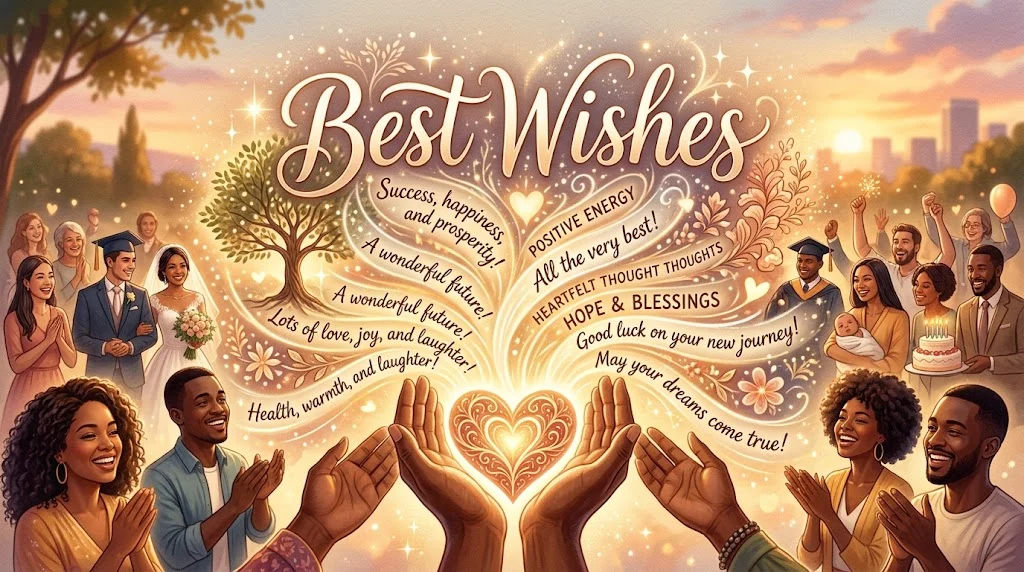
Best wishes means expressing kind thoughts and hoping good things happen to someone. It is commonly used to show goodwill, encouragement, happiness, success, or warm regards.
The phrase best wishes is simple, friendly, and flexible. It can appear at the end of a letter or email, or in messages for birthdays, congratulations, new jobs, weddings, farewells, and other important occasions. Cambridge describes it as a polite way to finish a letter to someone you know fairly well.
In everyday English, the phrase generally communicates a positive hope for another person. Depending on the situation, it can express encouragement, congratulations, support, or good thoughts for someone’s future.
💬 What Does Best Wishes Mean?
- Best wishes means hoping good things happen.
- It expresses kindness toward another person.
- The phrase communicates friendly goodwill.
- It can express hopes for happiness.
- It may express hopes for future success.
- It can show support during important moments.
- The phrase often sounds warm and polite.
- It works across many everyday situations.
- It can be personal or professional.
- Best wishes usually carries a positive meaning.
- It can express encouragement without sounding overly emotional.
- The phrase suggests sincere positive thoughts.
- It can accompany congratulations or good news.
- It may express hope for someone’s future.
- Best wishes can communicate friendly respect.
- It is commonly used in written communication.
- The meaning changes slightly with context.
- It can sound warmer than simply saying goodbye.
- It is suitable for many occasions.
- Overall, it expresses positive feelings toward someone.
🌟 Best Wishes Meaning in Simple English
- Best wishes means I hope good things happen.
- It means I hope everything goes well.
- It shows that you care positively.
- It expresses hope for someone’s happiness.
- It can mean wishing someone future success.
- It communicates friendly and positive feelings.
- It can show encouragement during change.
- It means sending someone your good thoughts.
- It can express hope for better days.
- It is a simple expression of goodwill.
- It can mean wishing someone well.
- It often carries a warm friendly tone.
- It can show support without being overly personal.
- It expresses positive hopes for another person.
- It works when words need to stay simple.
- It can accompany congratulations or encouragement.
- It often ends a friendly written message.
- It expresses kindness without requiring long explanations.
- It is broadly positive and respectful.
- Simply, it means wishing someone good things.
✉️ Best Wishes Meaning in a Message
- In messages, best wishes express positive thoughts.
- It can make a message sound warmer.
- It shows goodwill toward the recipient.
- It can accompany congratulations naturally.
- It works well for future hopes.
- It can express encouragement before important events.
- It may appear at the message ending.
- It can make farewells feel more positive.
- It works for personal and professional contacts.
- It can express happiness for someone’s achievement.
- It may show support during a transition.
- It can communicate sincere but simple affection.
- The phrase usually sounds polite and friendly.
- It avoids sounding too formal or distant.
- It can be personalized with specific wishes.
- Adding context makes the message more meaningful.
- It can accompany wishes for health.
- It can accompany wishes for success.
- It can accompany wishes for happiness.
- The phrase adapts easily to different messages.
🎉 Best Wishes Meaning for Different Occasions
- For birthdays, it expresses hopes for happiness.
- For weddings, it expresses hopes for married happiness.
- For graduation, it expresses hopes for future success.
- For jobs, it can express career encouragement.
- For farewells, it expresses positive future hopes.
- For recovery, it can express caring support.
- For holidays, it can express warm seasonal greetings.
- For anniversaries, it celebrates continued happiness.
- For new homes, it expresses hopes for joy.
- For new beginnings, it welcomes future possibilities.
- For achievements, it recognizes success and encouragement.
- For retirement, it expresses positive hopes ahead.
- For travel, it can express safe journey wishes.
- For exams, it can express encouragement and confidence.
- For business changes, it can express professional goodwill.
- For engagements, it expresses happiness for couples.
- For promotions, it can celebrate career progress.
- For difficult times, it can show supportive goodwill.
- For celebrations, it adds a positive closing.
- For personal milestones, it expresses warm encouragement.
💼 Is Best Wishes Formal or Informal?
- Best wishes can work in professional communication.
- It can also work with friends.
- The phrase is generally polite and friendly.
- It is less formal than very formal closings.
- It is warmer than many strictly professional endings.
- Context determines how formal it feels.
- It can suit colleagues you know reasonably well.
- It may suit acquaintances in friendly situations.
- It works naturally in many emails.
- It can work in personal letters.
- It may sound too casual for certain formal documents.
- Very formal situations may need different closings.
- The relationship affects how it is interpreted.
- Your overall message should match its tone.
- Adding personal details can make it warmer.
- Keeping wording simple can make it professional.
- Best wishes offers useful middle-ground flexibility.
- It does not usually sound overly intimate.
- It can bridge friendly and professional communication.
- Choose the closing according to your relationship.
📧 How to Use Best Wishes in an Email
- Best wishes can appear at an email ending.
- It usually comes before your name.
- Add a comma after the phrase.
- Keep the closing separate from your main message.
- It works well for friendly professional emails.
- It can suit colleagues and familiar contacts.
- It may accompany congratulations or updates.
- It can close a helpful follow-up email.
- It works naturally after a positive conversation.
- It can express goodwill before future contact.
- Avoid using it when extreme formality is required.
- Match the email’s overall tone.
- Keep your final sentence clear and friendly.
- Place your name directly underneath.
- You can personalize the preceding sentence.
- Best wishes can sound warmer than Regards.
- It can work after expressing appreciation.
- It may suit professional acquaintances well.
- Keep punctuation consistent throughout the email.
- Choose another closing when the situation requires it.
💖 Best Wishes Meaning in Personal Messages
- In personal messages, it can feel warm.
- It can express genuine care for someone.
- It works well for important life moments.
- It can show support without excessive emotion.
- It can accompany a heartfelt personal message.
- Adding someone’s name makes it more personal.
- Mentioning their achievement adds meaningful context.
- It can express hope for their happiness.
- It can show encouragement during change.
- It works naturally in cards and notes.
- It can accompany birthday greetings.
- It can follow congratulations naturally.
- It can support someone beginning something new.
- It can close a thoughtful message beautifully.
- It often sounds friendly without being intimate.
- It can work between acquaintances and friends.
- Personal details make the phrase feel less generic.
- The surrounding words shape its emotional tone.
- It can express sincere goodwill in simple language.
- Overall, it remains positive and considerate.
📝 Best Wishes Examples in Sentences
- Best wishes for your exciting new beginning.
- Sending you my best wishes today.
- Best wishes for your future success.
- We send our best wishes to you.
- Best wishes on your wonderful achievement.
- Please accept my best wishes today.
- Best wishes for happiness in your new home.
- Sending our best wishes for your wedding.
- Best wishes as you begin your new job.
- My best wishes are with you.
- Best wishes for a successful year ahead.
- Sending best wishes for your next adventure.
- Best wishes on this special occasion.
- Please give her my best wishes.
- Best wishes for continued happiness and success.
- Sending warm best wishes to your family.
- Best wishes for your exciting future.
- Our best wishes are with you always.
- Best wishes as you start this journey.
- Sending my very best wishes to you.
🥳 Best Wishes vs Good Luck
- Best wishes expresses broad positive goodwill.
- Good luck focuses more on hoped-for success.
- Best wishes can suit many occasions.
- Good luck often suits uncertain situations.
- Best wishes can accompany congratulations.
- Good luck can encourage someone before an event.
- Best wishes sounds broadly supportive.
- Good luck often feels more immediate.
- Best wishes can express future happiness.
- Good luck focuses on favorable results.
- Best wishes works well in farewells.
- Good luck works well before exams.
- Best wishes suits weddings and birthdays.
- Good luck suits competitions and challenges.
- Both phrases can express encouragement.
- Their meanings overlap in some situations.
- Context determines which sounds more natural.
- Best wishes has a broader emotional range.
- Good luck specifically emphasizes successful outcomes.
- Both are positive expressions of goodwill.
🌷 Best Wishes vs All the Best
- Both phrases express positive goodwill.
- Best wishes can sound warm and traditional.
- All the best often sounds casual.
- Both work well in friendly emails.
- Best wishes can feel slightly more personal.
- All the best can feel conversational.
- Both can close messages politely.
- Either phrase can express future hopes.
- Best wishes is common in cards.
- All the best is common in emails.
- Context should guide your choice.
- Your relationship affects the best option.
- Both can accompany congratulations.
- Both can express friendly encouragement.
- Best wishes can sound slightly warmer.
- All the best can sound relaxed.
- Neither phrase is inherently negative.
- Both communicate positive intentions.
- Choose based on your desired tone.
- Either can work naturally in many situations.
💡 Other Ways to Say Best Wishes
- All the best
- Wishing you well
- Warm wishes
- Best of luck
- Wishing you success
- Wishing you happiness
- My warmest wishes
- Every good wish
- Wishing you the very best
- Sending good thoughts
- Hope everything goes wonderfully
- Wishing you continued success
- Warmest regards
- Take care and all the best
- Wishing you a bright future
- Sending my warmest thoughts
- Hope everything goes well
- Wishing you happiness ahead
- Sending positive thoughts your way
- May everything go beautifully for you
❓ FAQs
What does best wishes mean in simple English?
Best wishes means hoping good things happen to someone. It expresses positive thoughts, goodwill, encouragement, happiness, success, or support depending on the situation.
Is best wishes a positive phrase?
Yes. It is normally used to communicate kind feelings and positive hopes for another person, for their future, health, success, or happiness.
Is best wishes formal or informal?
It can work in both personal and professional communication. Cambridge specifically describes it as a polite way to finish a letter to someone you know fairly well.
Can I use best wishes in an email?
Yes. It is commonly used as an email closing when you want to sound polite and friendly without being extremely formal.
What is the difference between best wishes and good luck?
Best wishes communicates broad goodwill, while good luck focuses more specifically on hoping someone succeeds in an uncertain or challenging situation.
What is another way to say best wishes?
Depending on the context, you can say All the best, Wishing you well, Warm wishes, Wishing you success, or Wishing you the very best.
Can I use best wishes for a birthday?
Yes. You can use it with a birthday greeting to express hopes for happiness, health, success, and a wonderful year ahead.
📝 Conclusion
The meaning of best wishes is simple but flexible: it expresses positive thoughts and hopes that something good happens to another person. It can communicate happiness, encouragement, success, health, support, or general goodwill depending on the occasion.
Because the phrase works across personal and professional situations, it is useful for emails, cards, birthdays, weddings, farewells, congratulations, new beginnings, and everyday messages. Choose the surrounding words carefully so the overall message matches your relationship and the occasion.
See Also More :
- 300 50th Birthday Wishes | Funny, Heartfelt, Sweet & Meaningful Messages In 2026
- 220 Get Well Wishes | Heartfelt, Short, Funny & Encouraging Messages In 2026
- 210 A Thousand Wishes | Heartfelt, Sweet, Hopeful & Beautiful Messages In 2026

Hi, I’m Mason Clark. I create simple and heartfelt content about blessings, prayers, and daily encouragement to inspire readers around the world.